About Dr. Raymond Zakhari, NP
I care for medically and psychiatrically complex older adults—and for the families responsible for them. Metro Medical Direct exists for the cases where heart disease, dementia, medication complications, mood changes, and aging are all intertwined. In those moments, families do not need another fragmented opinion. They need one steady clinician who sees the whole picture and takes responsibility for it.
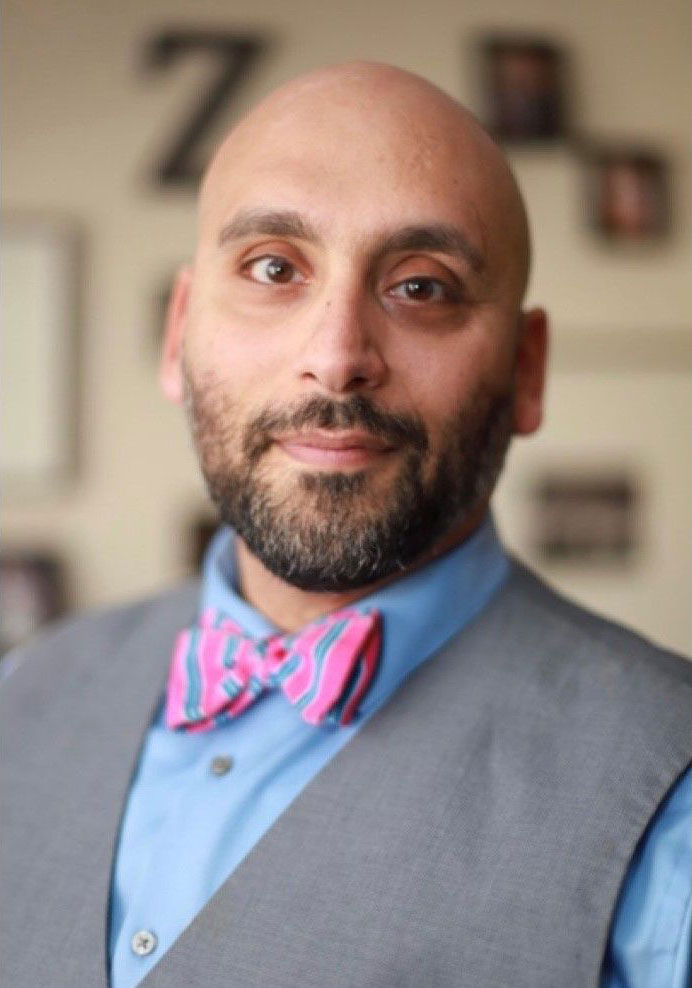
Dr. Raymond Zakhari, NP
DNP · Triple Board-Certified Nurse Practitioner Manhattan, New York City
The Clinician Families Call When Everything Is Complicated
For more than 25 years in Manhattan, I have cared for older adults with multiple chronic medical conditions, cognitive decline, and serious mental health needs. As a triple board-certified nurse practitioner in adult health, family practice, and psychiatric–mental health, my work sits at the intersection of internal medicine and psychiatry—where most complex elder cases actually live.
Before making Metro Medical Direct my primary focus, I spent 17 years on staff at NewYork-Presbyterian/Weill Cornell providing medical consultation within psychiatry at the Payne Whitney Clinic. I built this concierge house-call practice alongside that work. Earlier in my career, I trained in the cardiothoracic intensive care unit at Duke University Medical Center, caring for critically ill patients requiring precision, vigilance, and calm under pressure.
Over the years, I have seen versions of your situation many times: the assisted living resident repeatedly sent to the emergency room, the parent whose cognition is shifting in subtle but concerning ways, the family trying to reconcile conflicting recommendations from multiple specialists.
Today, as a clinical professor at Hunter College (CUNY), where I teach advanced pathophysiology and psychopharmacology, I bring hospital-level reasoning into your parent’s living environment. My role is to be calm, direct, and clinically honest when things change—whether the news is reassuring or difficult. You are not left guessing what to do next.
My Philosophy of Care
Much of modern elder care is reactive. A fall leads to the emergency room. Confusion leads to hospitalization. Agitation leads to more medication. Each crisis adds risk.
My approach is different. The goal is to prevent unnecessary suffering and avoid hospital harm whenever possible. Hospitals save lives, but for medically fragile elders, they also carry risks: delirium, infections, medication cascades, functional decline.
Stability, clarity, and anticipatory planning are often more protective than aggressive intervention. Good medicine in later life is not about doing everything. It is about doing what is thoughtful, proportionate, and aligned with the elder’s values.
"Good medicine in later life is not about doing everything. It is about doing what is thoughtful, proportionate, and aligned with the elder's values."
Core Commitments
- Prevent crises through anticipatory planning
- Reduce unnecessary hospital exposure
- Integrate medical and psychiatric care
- Communicate clearly with all stakeholders
- Respect the elder's dignity and values
Why a Nurse Practitioner—By Design
I practice as Dr. Raymond Zakhari, NP, because my doctorate (DNP) and advanced practice nursing training are intentionally different from, and complementary to, physician training.
Whole-Person Evaluation
Nurse practitioners are trained to evaluate the whole person: medical disease, medication burden, mood, cognition, function, family dynamics, and environment. In older adults, these elements cannot be separated.
Dual Certification Advantage
Because I hold board certification in both primary care and psychiatry, I do not have to decide whether a problem is "medical" or "behavioral." I can treat both, while collaborating closely with specialists when required.
High-Level Clinical Capability
I diagnose, prescribe, and manage complex conditions at a high clinical level. At the same time, my nursing foundation keeps the focus on function, quality of life, caregiver strain, and what is realistically sustainable outside the hospital.
Bridge Between Worlds
Families describe this as finally having one clinician who can speak fluently with hospital teams, adjust psychotropic medications responsibly, and still sit at the kitchen table and explain everything clearly.
Credentials at a Glance
Board Certification
Triple Board-Certified NP Adult Health Nurse Practitioner Family Nurse Practitioner Psychiatric–Mental Health NP
Doctoral Degree
Doctor of Nursing Practice (DNP)
17 Years
NewYork-Presbyterian / Weill Cornell Medical consultant within psychiatry and addiction services — high-acuity inpatient and emergency cases.
17+ Years
Founder — Metro Medical Direct AConcierge house-call practice serving medically and psychiatrically complex adults and elders in Manhattan.
Academic
Clinical Professor — Hunter College (CUNY) Advanced pathophysiology and psychopharmacology.
Additional Training
Veteran — Iraq War, Air National Guard Human Sexuality Fellowship — NYU School of Medicine Sexual Assault Forensic Examiner
How I Work With Families and Professionals
Families and professional partners typically reach out when they are overwhelmed and tired of coordinating multiple moving parts. My commitment is to:
- Be clinically thorough and transparent, even when the situation is complex.
- Remain steady during acute changes so you have one clinician who knows the history and can advise next steps.
- Respect the elder's dignity while being realistic about safety and prognosis.
- Communicate clearly with adult children, geriatric care managers, elder law attorneys, facility staff, and specialists so everyone operates from the same plan.
If you are looking for someone to assume responsibility for the clinical side of a complicated situation—and speak with you as a partner rather than through a chart—Metro Medical Direct was built for that.
Ready to Have a Conversation?
The first step is a brief introductory call. You describe the situation; I’ll tell you directly whether this practice is an appropriate fit.
Not for emergencies. If you believe your parent is in immediate danger, call 911 or go to the nearest emergency room.